Imagine landing on Mars with enough food to last a year, but no reliable way to grow the next harvest. Not because of water. Not because of sunlight, buy because of phosphorus.
When people imagine the obstacles to building a permanent settlement on the Moon or Mars, they usually picture radiation, vacuum, or the sheer cost of hauling cargo out of Earth’s gravity well. Every astronaut knows they’ll need oxygen. Few realize they’ll eventually need fertilizer.
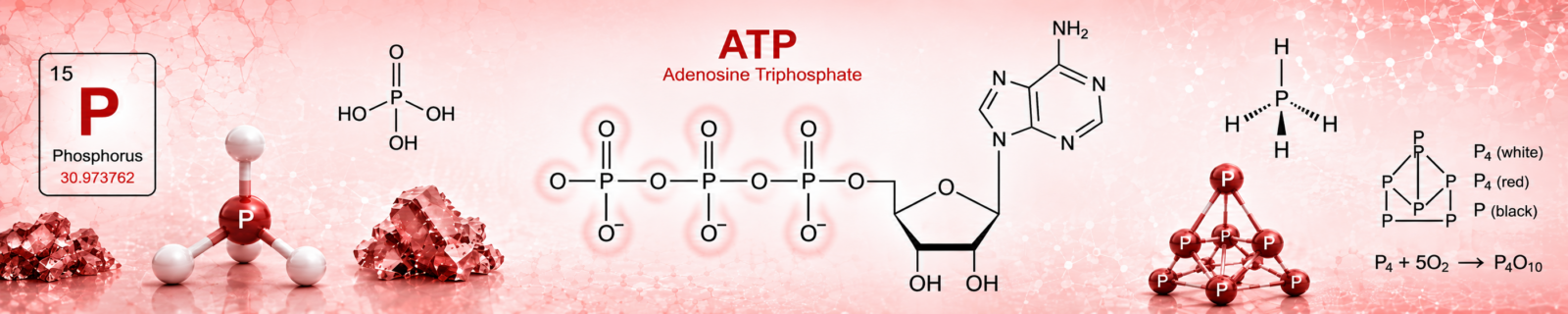
The overlooked culprit is a humble, unglamorous element that quietly underwrites almost every biological process a settlement would depend on: phosphorus. It’s in the backbone of DNA and RNA. It’s in the ATP molecules that power every cell. It’s in the phospholipids that make up every cell membrane. No phosphorus. No ATP. No crops. No settlement. That makes it a hard requirement for any outpost that hopes to grow its own food rather than ship every calorie from Earth. Unfortunately, phosphorus turns out to be one of the trickiest nutrients to secure off-world, for reasons rooted in the chemistry of the early solar system itself.
## An element that’s cosmically rare to begin with
Phosphorus occupies a strange position in the periodic table of life. The elements that dominate biological chemistry — hydrogen, oxygen, carbon, nitrogen, sulfur — are also among the most abundant elements in the universe, forged in abundance by stellar nucleosynthesis. Phosphorus breaks that pattern. As cosmochemist Matthew Pasek of the University of South Florida has noted, phosphorus is the least abundant element cosmically relative to its importance in biology. Ranked by cosmic abundance, it is substantially less abundant than the other major elements that make up a living cell (estimates place it well outside the top ten, though exact rankings vary somewhat depending on the abundance table used). Life, in other words, builds itself out of one of the rarer bricks available in the cosmic supply yard.
That scarcity matters more than it would for most other nutrients, because phosphorus has no workaround. Unlike nitrogen, which certain microbes can pull straight out of the atmosphere, or carbon, which plants capture from carbon dioxide in the air, phosphorus has no atmospheric shortcut. There’s no phosphorus in the Martian or lunar sky to fix. Every atom a plant uses has to come from rock, or from recycled biological material. There is no natural backup supply.
To understand why that rock-bound phosphorus is so hard to come by today, it helps to rewind roughly 4.5 billion years, to the birth of the Solar System itself. Research on the young solar nebula — the swirling disk of gas and dust from which the Sun and planets formed — shows that phosphorus behaved very differently from more familiar “volatile” elements like water or carbon dioxide. Rather than staying in the gas phase and condensing as ices in the cold outer solar system the way water did, phosphorus reacted quickly with iron and nickel and became incorporated into refractory solid grains early in solar system formation, on timescales as short as thousands of years. The practical result is that gas-phase phosphorus was depleted across large swaths of the forming solar system, leaving the element locked up in solids rather than freely available.
## Locked in the rock, not missing from it
Here’s the twist: the inner solar system, including the Moon and Mars, isn’t actually devoid of phosphorus. Lunar regolith holds it in consistent, if modest, concentrations, often concentrated in terranes rich in potassium, rare-earth elements, and phosphorus — informally known as KREEP — where it occurs in minerals such as schreibersite, an iron-nickel phosphide. Martian soil contains phosphorus at levels that, in some studies, are comparable to many phosphorus-bearing soils on Earth, and it holds a fraction that is plant-extractable.
Imagine standing on a mountain of fertilizer your crops simply can’t eat. That’s essentially the challenge facing lunar and Martian agriculture. The chemistry works against you: much of that phosphorus is trapped inside hard, poorly soluble minerals. Plants need it dissolved, as phosphate, in water. On Earth, billions of years of biological and geological weathering did that dissolving work gradually, grinding rock into soil that crops can actually use. Lunar and Martian regolith never had that luxury; nature never had billions of years there to do the job. You can be standing on a phosphorus deposit and still be functionally phosphorus-starved if your crops can’t get at it.
## Why this matters more off-world than on Earth
On Earth, when phosphate rock isn’t soluble enough for agriculture, farmers simply mine phosphate ore, process it industrially into soluble fertilizer, and truck it to the field — a global supply chain most people never think about. That supply chain doesn’t exist on the Moon or Mars, and there’s no version of it a settlement can build overnight. Setting up industrial-scale phosphate processing requires energy infrastructure, chemical reagents, and equipment that either has to be manufactured locally, at enormous cost in time and complexity, or launched from Earth at a price tag that makes the whole point of local food production moot. A kilogram of fertilizer shipped from Earth costs, roughly speaking, whatever it costs to launch a kilogram of anything to the Moon or Mars — thousands to tens of thousands of dollars, depending on the mission. Multiply that by the tonnage a real farm needs, season after season, and it becomes obvious that importing your way out of the phosphorus problem simply isn’t viable for a settlement that wants to be self-sufficient rather than permanently dependent on resupply.
Fortunately, biology has evolved its own tools for unlocking stubborn phosphorus, and researchers are now trying to import those tools off-world. One line of study has tested phosphorus-solubilizing bacteria, including species such as *Bacillus megaterium* and *Pseudomonas fluorescens*, added to lunar regolith simulant, where the microbes dissolved otherwise-locked inorganic phosphorus and measurably improved the growth of a tobacco relative used as a model plant. Other groups are investigating beneficial fungi, including mycorrhizal species that form partnerships with plant roots, as a way to biomineralize and mobilize nutrients from raw regolith — in effect trying to compress millions of years of terrestrial soil formation into a few growing seasons using engineered microbial ecosystems. Early trials growing crops like radish, rye, and cress directly in NASA-provided lunar and Martian simulants, supplemented with nutrient solutions, have shown that plants can survive and even set seed. But yields and germination in the lunar simulant lagged well behind both Earth soil and the Martian simulant, underscoring that the Moon presents the tougher case of the two.
Of course, the most valuable phosphorus source in any settlement won’t come from the ground at all. It will come from the settlers themselves. Human waste is rich in phosphorus, and closing that loop — turning astronauts’ own biological byproducts into fertilizer rather than something to be discarded — will likely be just as essential as anything pulled from regolith.
## The bigger picture for settlement planning
None of this means phosphorus scarcity is an insurmountable dealbreaker for space settlement — but it does mean the problem can’t be waved away with the assumption that “there’s dirt, so we can farm it.” Any serious settlement architecture, whether on the Moon or Mars, will likely need a dedicated in-situ resource utilization strategy specifically for phosphorus: identifying phosphorus-rich deposits like lunar KREEP terranes, developing low-energy ways to liberate soluble phosphate from those minerals, and seeding regolith with engineered microbial communities that can do the chemical heavy lifting biology already perfected on Earth over billions of years.
And the traffic on that idea doesn’t run one-way. Earth has its own, very different phosphorus problem, and the same closed-loop thinking a Mars settlement is forced to adopt out of necessity is exactly what Earth’s agriculture needs out of urgency. Global agriculture currently runs on mined phosphate rock, and the largest reserves are concentrated in a small handful of countries, mainly Morocco, which makes the supply chain a geopolitical chokepoint as much as a geological one. Meanwhile, the phosphorus that farms apply as fertilizer routinely runs off into rivers, lakes, and coastal waters, where it feeds algae blooms that choke off oxygen and create dead zones — the same element that’s too scarce off-world is, on Earth, wasted so badly that it pollutes. A settlement that has to build tight, near-total phosphorus recycling — pulling it back out of crop waste and human waste and feeding it straight back into the next planting cycle, because there’s no truck coming with more — is essentially prototyping the precision recycling systems that could shrink fertilizer runoff and stretch Earth’s limited mineable reserves. Closed-loop hydroponic and aquaponic systems already being tested for lunar and Martian habitats, for instance, recover and reuse nutrients far more efficiently than open-field farming ever could, and versions of that same engineering are already migrating into vertical farms and precision-agriculture operations here on Earth.
Solving the phosphorus problem won’t earn the headlines that giant rockets or gleaming habitats do. But long before Mars needs a million settlers, it will need its first sustainable phosphorus cycle — and the tools built to close that loop off-world may end up doing as much good back home as they do on another planet.
## Sources
**Primary sources**
Fackrell, L. E., et al. (2026). Selection of beneficial fungi for plants with the potential to metabolize lunar and Martian regolith. *Frontiers in Astronomy and Space Sciences*. https://www.frontiersin.org/journals/astronomy-and-space-sciences/articles/10.3389/fspas.2026.1784533/full
Fackrell, L. E., et al. (2024). Overview and recommendations for research on plants and microbes in regolith-based agriculture. *npj Sustainable Agriculture*. https://www.nature.com/articles/s44264-024-00013-5
Pasek, M. A. (2019). Phosphorus Volatility in the Early Solar Nebula. *Astrobiology* / PMC. https://pmc.ncbi.nlm.nih.gov/articles/PMC6581198/
Wang, X., et al. (2023). Phosphorus-solubilizing bacteria improve the growth of *Nicotiana benthamiana* on lunar regolith simulant by dissociating insoluble inorganic phosphorus. *Communications Biology*. https://www.nature.com/articles/s42003-023-05391-z
Duri, L. G., et al. (2021). The Potential for Lunar and Martian Regolith Simulants to Sustain Plant Growth: A Multidisciplinary Overview. *Frontiers in Astronomy and Space Sciences*. https://www.frontiersin.org/journals/astronomy-and-space-sciences/articles/10.3389/fspas.2021.747821/full
Duri, L. G., et al. (2022). Can Lunar and Martian Soils Support Food Plant Production? Effects of Horse/Swine Monogastric Manure Fertilisation on Regolith Simulants Enzymatic Activity, Nutrient Bioavailability, and Lettuce Growth. *PMC*. https://www.ncbi.nlm.nih.gov/pmc/articles/PMC9740528/
NASA Astrobiology. Phosphorus and the Birth of the Solar System. https://astrobiology.nasa.gov/news/phosphorus-and-the-birth-of-the-solar-system/
**Further reading**
Phosphorus Condensed Inside Asteroids in the Outer Solar System. SciTechDaily. https://scitechdaily.com/phosphorus-condensed-inside-asteroids-in-the-outer-solar-system/
Life’s First Taste of Phosphorus. Astrobiology Magazine. https://www.astrobio.net/origin-and-evolution-of-life/lifes-first-taste-of-phosphorus/
The Cosmic History of Life-Giving Phosphorus. Live Science. https://www.livescience.com/22641-cosmic-phosphorus-first-life-astrobiology.html
Mars fungi could make red planet regolith fertile for crops. Phys.org (2026). https://phys.org/news/2026-05-mars-fungi-red-planet-regolith.html
The Phosphorus Problem
AI Disclosure: AI tools were used to support the creation of this article. The final version was reviewed, edited, and approved by a human editor.
Reader Slot A
Reader Slot B
Reader Slot C